
Why your pieces got better and your reading didn't

By Ashley Song
Reading time: 8 minutes
A repertoire can look advanced while every first read still feels elementary.
My teacher used to put a new score on the stand near the end of the lesson and say, just sight-read it.
I dreaded that more than anything else in the hour.
Not because I couldn't play. I had pieces — good ones. Pieces I'd worked on for months and could play properly, with pedal and phrasing and all of it. If you'd walked past the room you would have thought I knew exactly what I was doing.
But a page I had never seen before? I'd find the first chord, lose it, go back, and work through it one note at a time like I was fifteen again.
And the whole time: he's watching me do this.
I had been playing for twenty years.
For most of those twenty years I was certain I knew what the problem was. I hadn't practised enough. I wasn't consistent enough. Other people were putting in the hours and I wasn't, and that was the whole story.
It took me far too long to work out that it wasn't the story at all.
I memorize as early as I possibly can
The moment I can play a passage without looking, I stop looking. I tell myself it's because memorising is good musicianship.
It isn't that. It's that the page stops being useful to me the second my hands know the way.
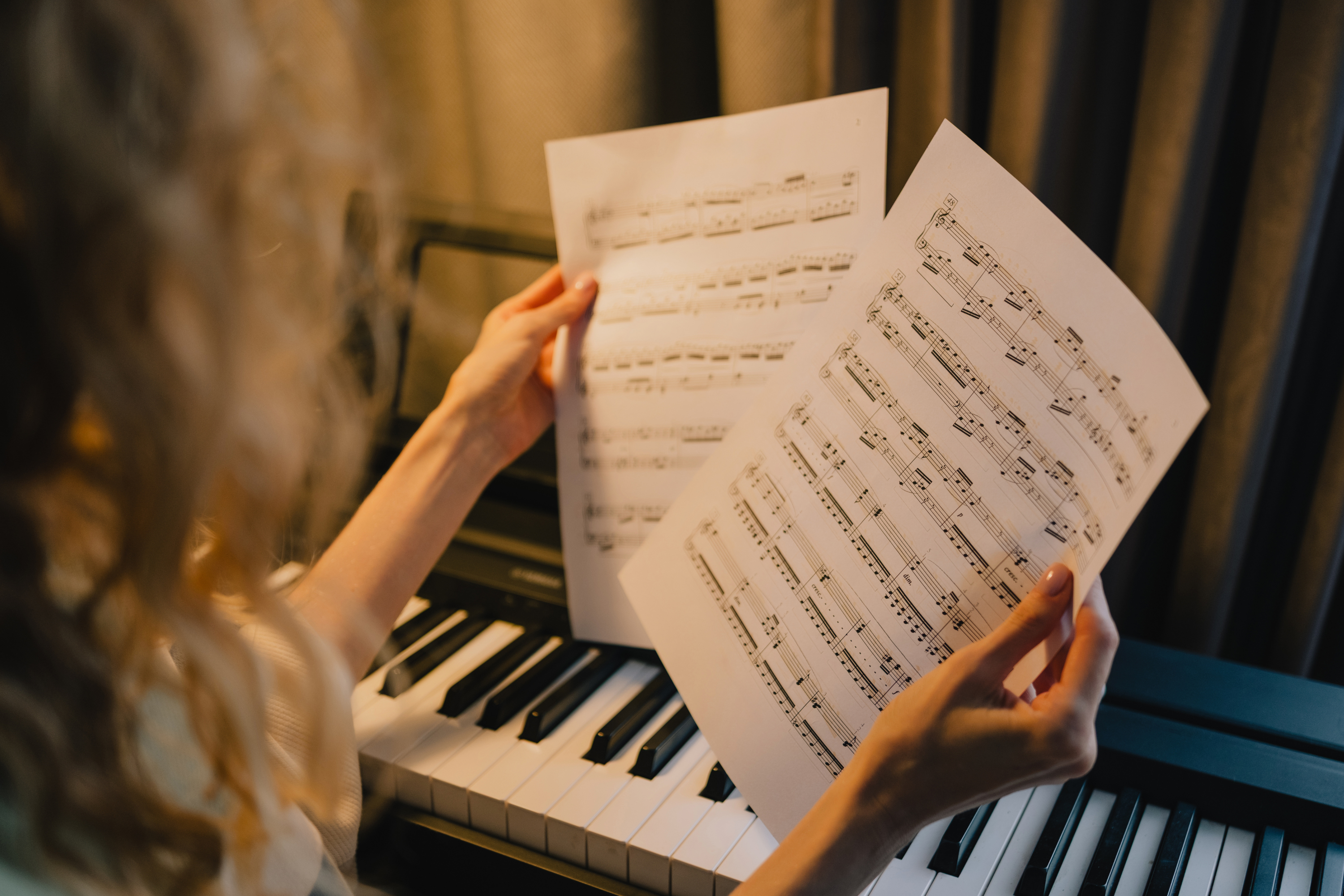
I'm not reading while I play. I'm reciting, with a piece of paper in front of me for reassurance.
I can only ever start from the beginning
If I stop in the middle, I go back to bar one. There's no other way in.
I thought this was normal. It is common, which isn't the same thing.
A page with no units on it has no entrances. I'm not playing a piece that has parts — I'm playing one long chain, and a chain can only be picked up at the front.
Bar one is not the only way in.
I avoid easy pieces
This is the one I've never said out loud to anyone.
When somebody suggests something simpler to read through, I find a reason not to.
Because an easy piece would take away my excuse. If I'm slow on something difficult, that's the piece's fault. If I'm slow on something easy, it's mine.
So I keep choosing music that's hard enough to explain why the first read went badly.
A new page takes exactly as long as it always did
This is the one I explained away the longest, and it's the one that should have stopped me.
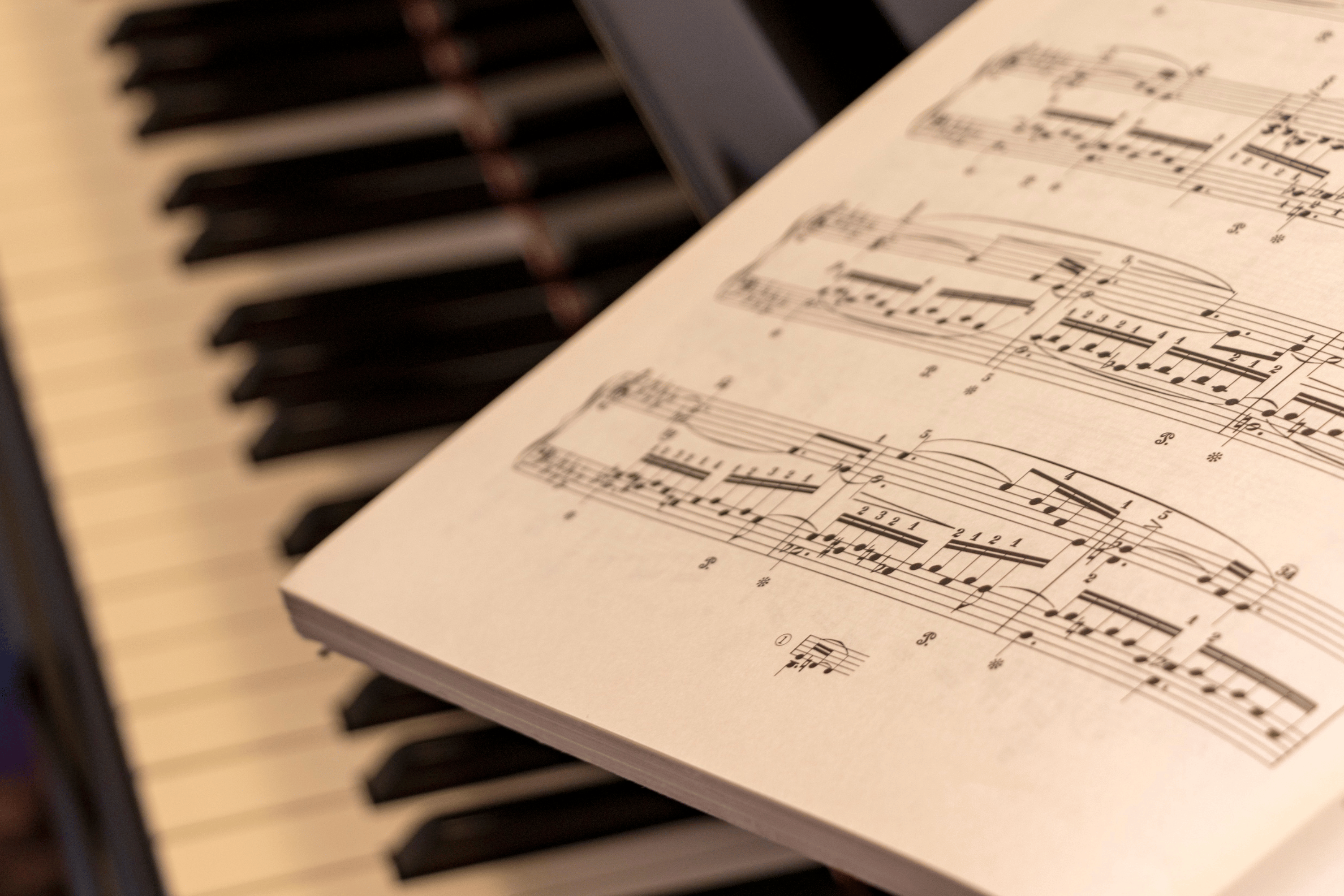
Twenty years of playing. And I still approach an unfamiliar page the way I did as a teenager: first note, second note, third note.
Everything else I do got faster with experience. This didn't. And twenty years has to be accumulating somewhere — if it isn't showing up on a new page, it isn't accumulating at all.
That thought is genuinely unpleasant. I avoided it for a long time.
I learned the same eight bars three times
Then came the afternoon that actually changed something.
I was stuck on a passage late in a piece. I finally worked out where in the score I even was, pieced it together — and then realised I had already learned it. Twice. Earlier in the same piece.
I'd been staring at that page for an hour. And once I'd finished learning it from scratch, again, I looked up and saw it: the same bars, the ones I had played effortlessly twenty minutes earlier, in the same piece, in the same ink.
I had paid for it three times.
That was the moment I stopped believing this was a practice problem.
What I had already tried
I want to be fair to all of it, because none of it was stupid and some of it helped.
"Just sight-read more."
The standard advice, and it isn't wrong exactly. But reading more pages the way I was already reading them made me faster at doing the thing that wasn't working. Repetition doesn't change how you're paying attention. It just scales it.
Note-name drills.
They made me quicker at naming symbols. Naming symbols was never the bottleneck.
Slow, careful run-throughs.
Genuinely good practice, and my playing got cleaner. It improved the accuracy of my decoding. It didn't change what I was decoding into.
A metronome.
Fixed my timing. Left my reading precisely where it was.
Another method book.
New pieces, same instruction underneath: here are the notes, work them out. I finished it and I was the same reader on the last page as on the first.
None of that was wasted. The pieces were real, the hours were real, and I can play things now that I couldn't play then.
I just never had anyone tell me what to look at.
Two skills, and only one of them was growing
Here's the part that reorganised everything for me once I saw it.
There are two different things happening when you learn a piece. One is getting that piece into your hands. The other is getting better at meeting music you've never met.
I had spent twenty years getting extremely good at the first one. Months on a single piece, polishing, memorising, refining. And every one of those months was an hour not spent reading something new.
My repertoire advanced. My reading stayed where it was.
Which means the two things people use to judge me — what I can play, and what I can read — had drifted so far apart that anyone putting a fresh page in front of me was, without knowing it, testing a completely different skill from the one I had been building.
That's why the lesson felt like an ambush. It wasn't measuring the thing I'd worked on.
What I was actually doing wrong — and it wasn't effort
When I finally described all of this to David, he didn't ask how much I practised. He asked what I saw when I looked at the page.
Then he explained it like this.
Notes are letters.
I climbed that rung as a child. I understood the logic. I was supposed to move on.
A fluent reader doesn't read the letters one by one. He takes in the whole word, recognises what it means, and moves to the next one, until he has a sentence.
For twenty years, that is not what I was doing. I was reading letter by letter, out loud, without ever thinking about what the words meant. Like a child who has just learned to read and can't tell you what the page said — because he was too busy with the letters.
And here's what reading by shape actually feels like, in one line:
Tihs snetcene is raedalbe.
You read that. You couldn't have read it letter by letter — the letters are in the wrong order. You recognised the shapes.
On a page of music, I was still doing it letter by letter.
It's a skill, not a verdict
That distinction mattered more to me than anything else I've written here.
For twenty years I had read my slow first attempts as information about what kind of musician I was. They weren't. They were information about one specific processing habit that nobody had ever asked me to change.
And the thing about reading it as a verdict is what it makes you do next. Go back and look at Sign 3 — the easy pieces I wouldn't touch. You don't walk towards the thing that proves you're not good enough. You arrange your practice so you never have to find out.
I'm not the only one who did that.


- Naomi
Posted on

"Usually I avoid old pieces because I hate finding out how bad I still am at reading notes. I actually wanted to go back and look at them after this."
Read the second sentence again. That's not someone saying they feel better. That's someone walking towards the thing they used to avoid.
Why nobody had ever mentioned it
Not because my teachers were bad. Every one of them was competent and every one of them taught me things I still use.
But there's a skill nobody ever explained to me, and it's a strange one to put into words: deciding what counts as one thing.
Whether these eight notes are eight separate events, or one shape that happens to be written out. Whether this bar is new material or the same idea as bar four, moved.
Nobody ever taught me that, and I don't think it was withheld. I think it sits in a gap. Notation teaching gets you to the point where you can look at a symbol and produce the right sound at the right time — and then it moves you on to repertoire, because that's what lessons are for.
From the outside, someone who decodes accurately and someone who reads fluently look identical. They only come apart when a new page appears. By then everybody calls it talent.
Nobody showed you. That part is fixable.
What he gave me
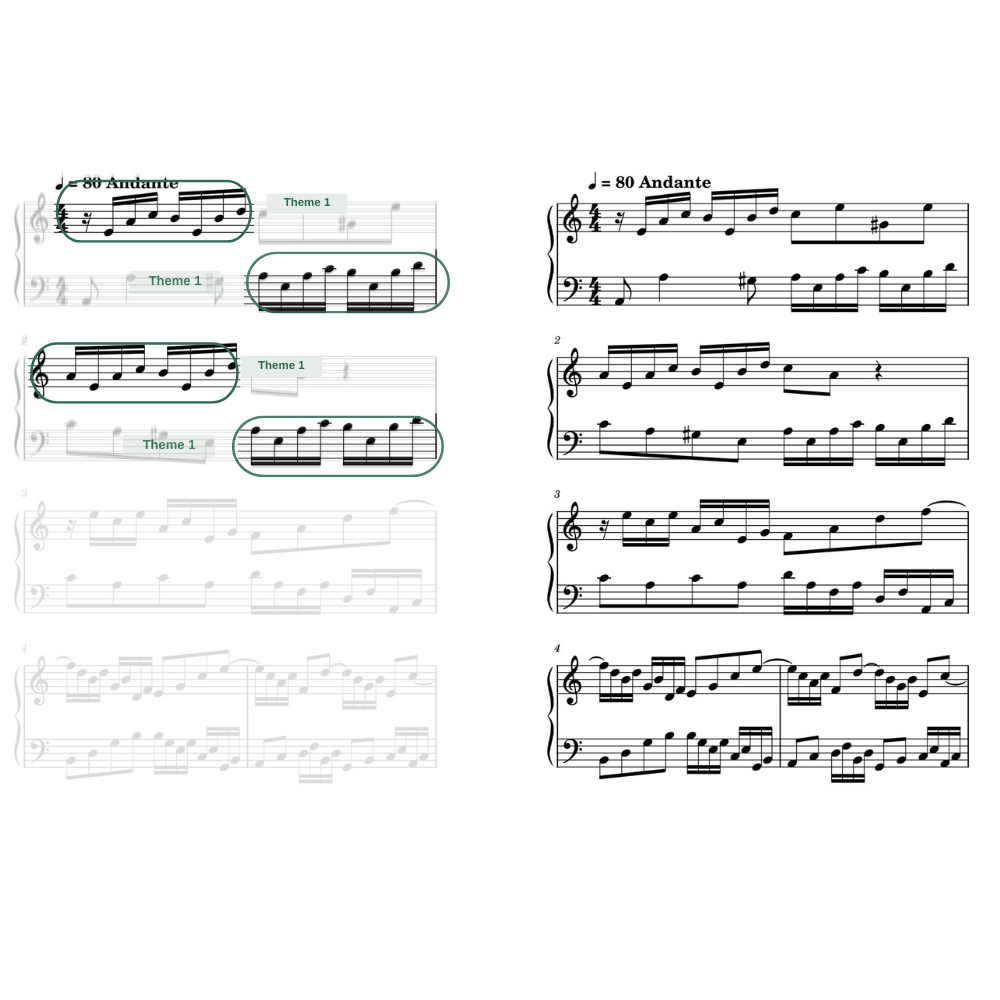
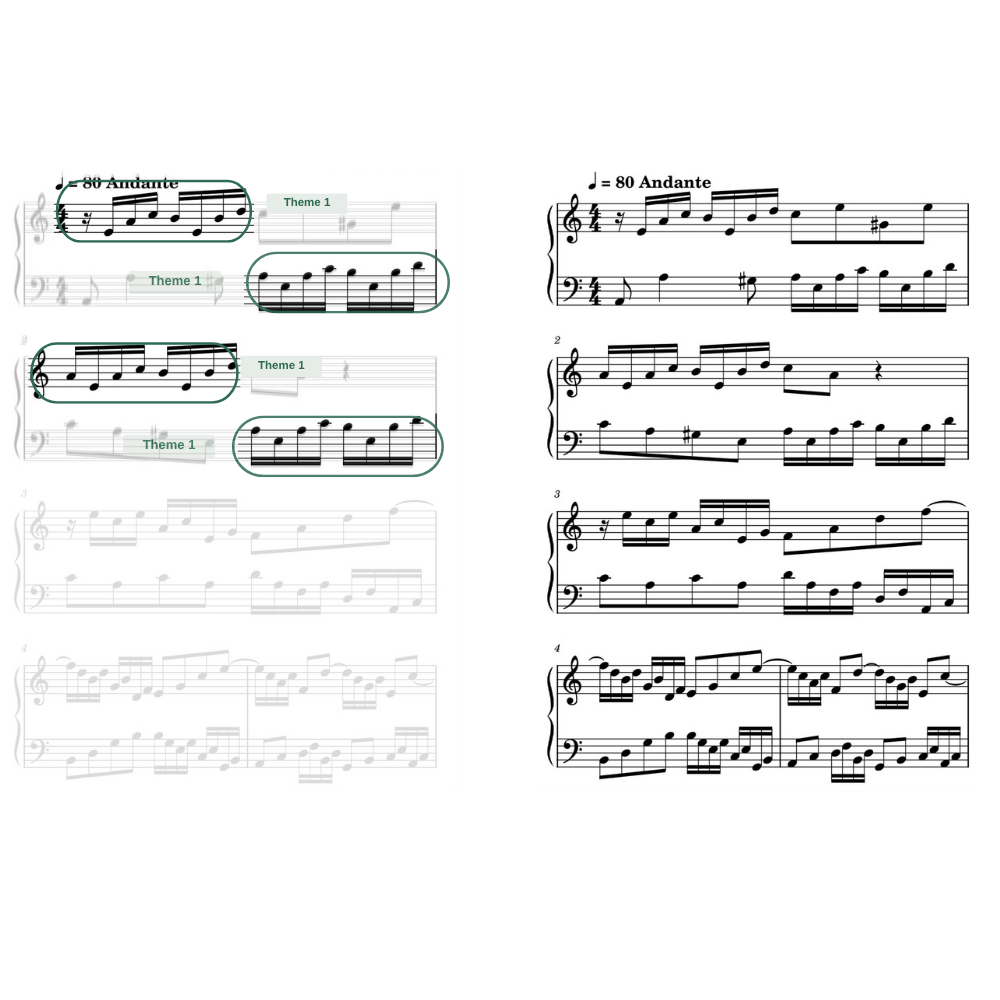
The relationships that come back in a piece aren't hidden and they aren't a matter of taste. They're printed. Finding them is a procedure, and it has six steps: inspect, group, compare, predict, play, transfer.
He didn't give me exercises. He gave me a workbook — real scores, Bach and Chopin, with the recurring material marked, and those six passes to walk you through finding it yourself.
A first reading book. For someone who can already read.
 Before
 After
AfterOne question, if you recognised yourself up there
There are a lot of ways to spend the next year at the piano, and most of them are fine. Before you commit to any of them, ask it this:
Does it leave me able to see something on the next page that I couldn't see before?
If it only hands you another piece to learn, you'll finish it as the same reader you started as. That already happened to me more times than I want to write down.
A teacher who works this way passes that test. So does the workbook.
What I was after, in the end, was a fairly small sentence. I wanted to open something unfamiliar and be able to say: this is new music, but it is not all new to me.
SEE — Pattern Recognition Workbook for Piano →
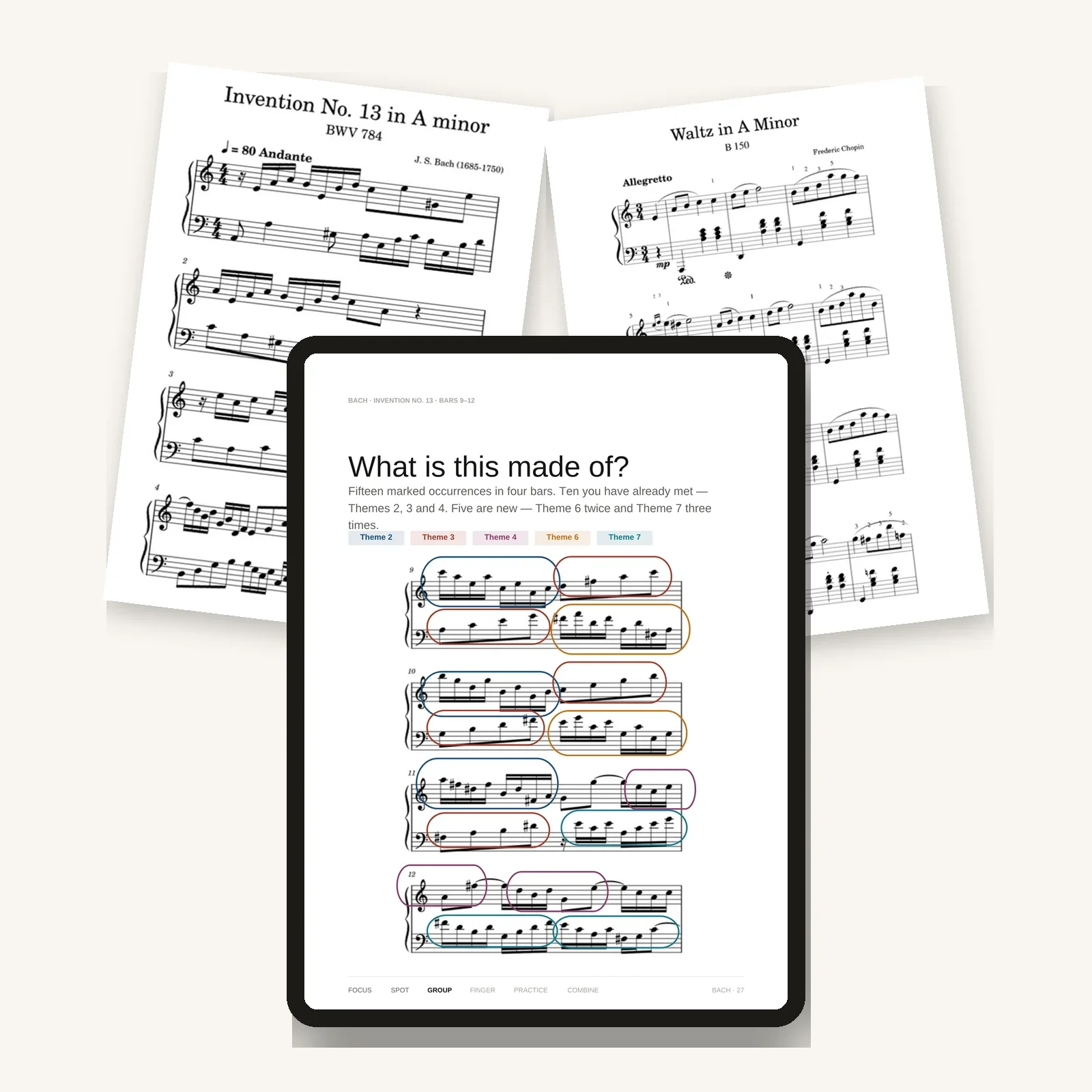
A workbook, not another explanation.

A 133-page workbook you write in, not read through
Two complete studies — Bach's Invention No. 13, Chopin's Waltz in A minor
Two printable working scores, clean enough to mark yourself
One-time payment · 30-day money-back guarantee

30-Day Guarantee: Musifluent.com offers a 30-Day Money-Back Guarantee in case you don't fall in love with our product.
People who had the same blind spot

Lucy
12 days ago

"I started looking for patterns in my old songs, which took MONTHS to learn, I cant believe that I didnt recognize those patterns by myself, I just laugh at my old self"

Anne-Marie
1 Month ago
"At first I thought this was going to be an e-book on music theory, which I always hated, but it actually feels like the more natural way of learning music"
Frequently Asked Questions
Some of the musical examples are deliberately easy, and that is a design decision rather than a judgement about your level. Easy notes free your attention for the thing being trained. If the notes themselves are hard, you spend everything on the notes and learn nothing about how to look.
No. It trains what you notice on a page — which is something reading depends on, but it is not a promise about sight-reading speed. Be suspicious of anything that makes that promise.
No. There are no chord symbols and no Roman numerals. You work with what is printed: what repeats, what returns changed, what belongs together. Any term you need is defined inside the exercise where you need it.
No and Yes. If you would have a teacher who already works this way, you wouldn't be here.
No. What your hands already know is material to work with, not something to undo. The tutorials got you the pieces. This is about what sheet music can give you on top of that.
SEE — A Pattern Recognition Workbook for Piano
For pianists who can play pieces but stall on a new page
133 pages you work in, not read through
Two complete studies — Bach and Chopin — plus printable scores
One-time payment · 30-day money-back guarantee